They used to get along
A vet visit, redirected aggression, or one serious fight changed the relationship.
After a fight or failed introduction
After a fight or stalled introduction, answer a short, red-flag-first questionnaire to see whether your cats should stay at the current step, move forward, or step back.
Free research preview · No payment · About 3 minutes

The gap after the advice
Most guides explain separation, scent exchange, barriers, and supervised time. They rarely tell you how today’s behavior should change tomorrow’s plan.
A vet visit, redirected aggression, or one serious fight changed the relationship.
You have repeated the same stage for weeks and cannot tell whether it is helping.
One chase or fight made you unsure how far to step back or when to try again.
How the preview works
Injuries, eating or elimination changes, sudden behavior changes, and inability to separate override the ordinary flow.
The self-check looks at what happened, the strongest recent behavior, resource access, and current exposure.
Your free result names the current stage, the main blocker, and one action for the next 24 hours.
Read before you change the distance
Start with the situation that sounds familiar. Each guide answers the immediate question first, then points to the free educational self-check.
After a fight
After two cats fight, start with safe separation, observable signals, and a conservative next step instead of a rushed reunion.
Read the guideWhen progress reverses
A setback during cat introduction is a signal to reassess the stage, compare observations, and choose Hold, Step Back, or Stop safely.
Read the guideAfter a vet visit
When cats react after a veterinary visit, pause contact, check for health concerns, and use a conservative reintroduction setup.
Read the guideResource access
Resource blocking can be quiet and still matter. Learn what to observe around litter, food, water, routes, and safe separation.
Read the guideReading progress
Look for observable progress in disengagement, access, recovery, and repeatability before moving a cat-introduction stage forward.
Read the guideChoosing the next stage
Separate Hold, Step Back, and Stop decisions during cat reintroduction using safety flags, disengagement, recovery, and repeatable observations.
Read the guideCurrent stage · Visual contact
A mild stress signal appeared at the current distance. Repeating a shorter session is more conservative than moving closer.
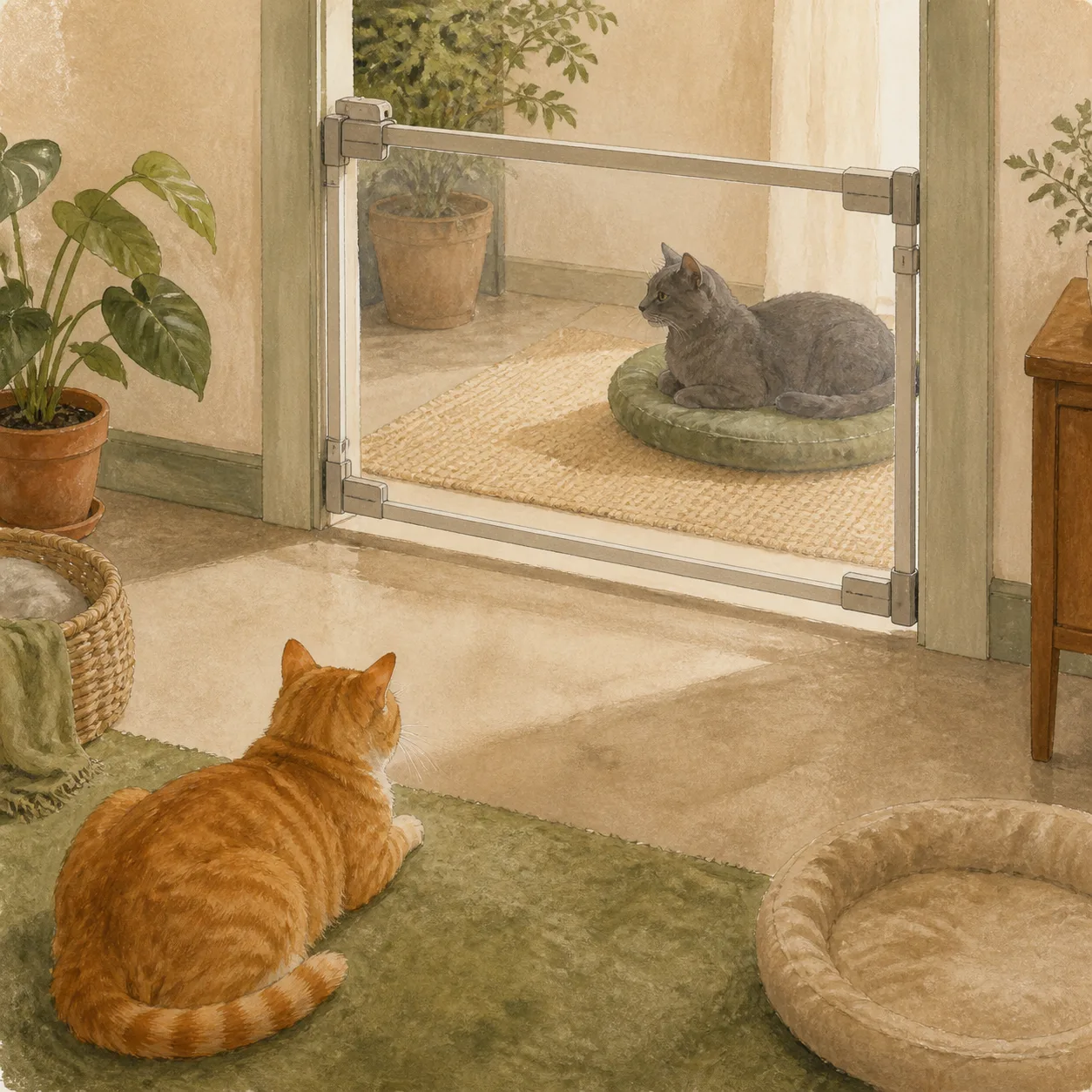
Keep visual contact behind a secure barrier and stop while both cats can still disengage.
The planned founding beta
The planned $19 beta adds a complete structured questionnaire, one daily task, a one-minute check-in, and an explainable Advance, Hold, Step Back, or Stop decision.
Payment will remain closed until the payment, payout, delivery, operator, and sales checks are complete.
Explore the sampleSafety changes the flow
Pause and contact a veterinarian if there is an injury, a sudden unexplained behavior change, or a change in eating or elimination.
Seek individualized help if you cannot keep the cats safely separated or if more than two cats are involved.
This tool provides education, not veterinary diagnosis, treatment, medication advice, or a guarantee that cats will become friends.
Read the safety guidanceStart with the next 24 hours
The educational self-check is free during the research preview. You can join the founding-beta list after receiving an eligible result.
Start the self-check