After a vet visit
When One Cat Comes Home and the Relationship Suddenly Changes
Some owners search for “non-recognition aggression” when cats react differently after one returns from a clinic. That phrase is a search label, not a diagnosis. The safe response is to check for unresolved health or recovery concerns, create distance, and observe what each cat can do before considering any renewed contact.
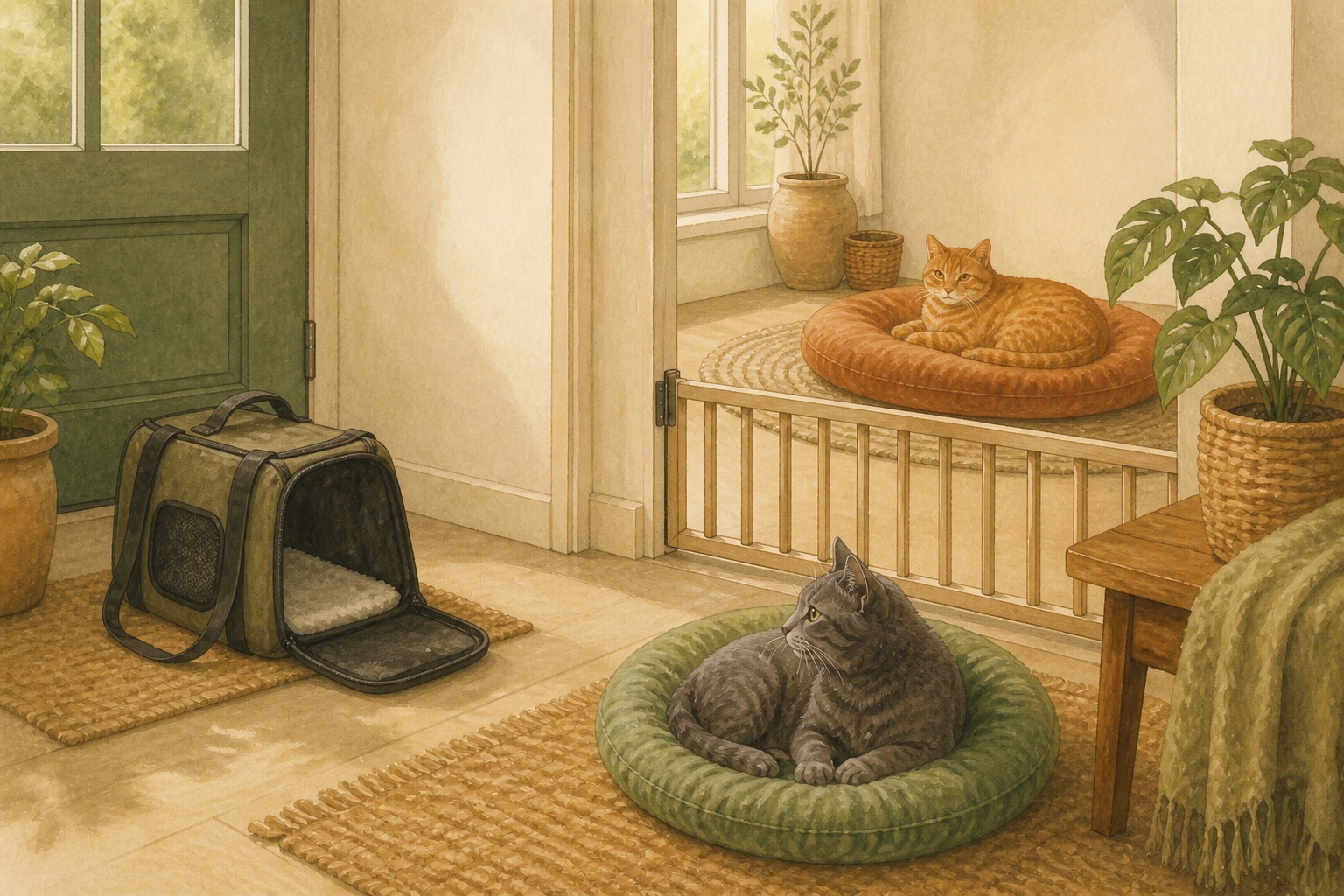
Follow the treating clinic’s discharge instructions first. Keep the cats separated if there is any unresolved pain, sedation, illness, injury, or recovery concern; contact the veterinarian when unsure. Only after the household is medically ready and safely separable should you consider a staged, observable reintroduction.
Treat health and recovery questions as the first gate
A web page cannot determine whether a cat is medically ready for normal activity. Follow the treating clinic’s instructions and contact the clinic if the returning cat has unresolved pain, sedation, illness, injury, restricted activity, or another recovery concern. Seek urgent veterinary care for an emergency sign, and do not use the automated flow to interpret a symptom.
The same safety gate applies if either cat stops eating normally, has a concerning elimination change, or shows a sudden unexplained health or behavior change. The safety and escalation page lists the situations that should leave the automated path.
Create distance without forcing a reunion
If the veterinarian has not told you otherwise and you can separate safely, use a closed door or secure barrier to give each cat independent space. Provide separate access to food, water, litter, resting and hiding places, and routes through the home. Avoid carrying one cat toward the other, punishment, or a test reunion designed to see whether the problem is “fixed.”
Write down the setup and the observations that follow: whether either cat watches, freezes, hides, warns, pursues, blocks a route, or can turn away. The details help you decide whether the current separation should be held and give a professional a clearer account if the relationship does not settle.
Use a staged return only when the gate is clear
The educational pathway begins with the simplest exposure the household can manage, not with a universal timetable. Depending on what the cats can safely do, that may mean full separation, scent-only exchange, visual contact behind a secure barrier, controlled proximity, or shared space with supervision. Advance no more than one stage in a day, and do not advance because a calendar says it is time.
Hold when observations are incomplete or mixed. Step Back when a milder warning signal appears at the current exposure but both cats can still disengage and recover. Stop and seek help if there is a safety flag, escalating pursuit or physical conflict, loss of resource access, or no safe way to separate.
What to record during the first observations
Keep the record short enough to use. Note the distance or barrier, the length of the observation, whether each cat could eat or play, whether either cat could turn away, the strongest behavior you observed, and how long recovery took. Also note owner stress or a change in the environment; a setup that cannot be supervised reliably is not ready for more exposure.
These records are context, not a medical assessment. If the free educational self-check returns a stop decision, follow its safety message and seek appropriate help. If it returns a standard preview, read it as one conservative educational next action rather than a guarantee.
When to ask for help
Ask the treating veterinarian for guidance when recovery instructions are unclear or either cat’s health status is uncertain. Ask for individualized behavior help when the cats cannot remain safely separated, the process continues to intensify, resources are repeatedly blocked, or more than two cats are involved.
For professional context, see the 2024 AAFP Intercat Tension Guidelines. Cat Reintro Guide uses cautious, observable language and does not claim to diagnose a post-visit cause, replace a veterinarian, or promise that a relationship will return to normal.
Frequently asked questions
Why are my cats fighting after one came home from the vet?
The phrase “non-recognition aggression” is a common search label, not a diagnosis. First follow the treating clinic’s instructions and check for unresolved health or recovery concerns. Separate safely and seek professional guidance when unsure.
Should I bathe or perfume the returning cat?
Do not use a web guide to improvise a treatment or alter a recovery plan. Follow the veterinarian’s instructions, avoid forced contact, and use safe separation while you ask the clinic what is appropriate.
When can I let the cats see each other again?
Only after the treating clinic’s recovery guidance is clear, both cats can be safely separated, and the setup supports controlled observation. Use the simplest manageable stage and hold when evidence is mixed.